Homeostatic Patterning: When Systems Return to What Hurts
Why Systems Return to What Hurts
Most people assume that if something is painful, a system would naturally move away from it. From the perspective of Functional Systems Regulation Theory (FSRT), this assumption misunderstands how living systems actually function. Systems do not move toward what feels good. They move toward what is familiar and sustainable. This is what FSRT refers to as homeostatic patterning.
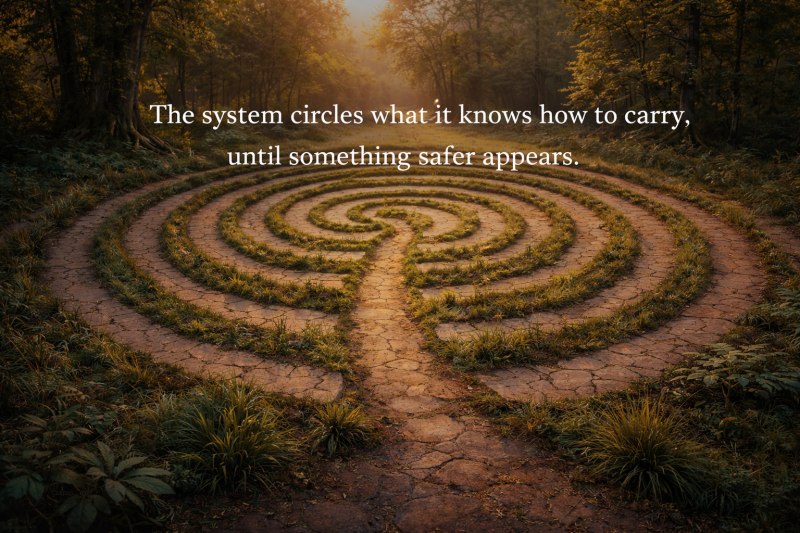
Homeostatic patterning describes the tendency of biological and psychological systems to return to established patterns of activation, regulation, and relationship—even when those patterns are painful, limiting, or self-defeating. These patterns persist not because a system prefers suffering, but because they have historically ensured survival. Homeostasis is often misunderstood as balance. In reality, it is conservation.
A nervous system organizes around what it knows it can hold. Once a pattern has proven survivable, it becomes a reference point. The system returns to it not out of choice, but out of continuity. This is why insight alone rarely produces change. Awareness can expand perception, memory, and meaning. It can help a person recognize patterns, name wounds, and understand origins. But without sufficient safety, insight increases sensitivity without increasing capacity. The system sees more but still returns to what it knows.
From an FSRT lens, this return is not resistance.
It is regulation.
Patterns that outsiders label as “maladaptive” are often the most reliable strategies a system has ever had. Hypervigilance, emotional withdrawal, compulsive productivity, relational collapse—these are not random failures. They are patterned solutions formed in environments where alternatives were unavailable. When conditions do not change, neither do patterns.
This is where many therapeutic and self-help approaches stall. Effort is applied where structure is absent. Individuals are asked to override patterns that are still required for survival. When this fails, the system is blamed rather than the conditions it is adapting to. Homeostatic patterning explains why people can heal, grow, and still return to familiar pain. The system is not sabotaging progress. It is conserving stability. Lasting change does not occur when a pattern is challenged. It occurs when the conditions that necessitated the pattern are no longer present. Only then does the system loosen its grip.
In FSRT, reorganization requires safety, not force. When safety is consistent, new patterns become sustainable. When relational, environmental, and internal systems align, the nervous system no longer needs to default to old strategies. Regulation emerges not because a person tries harder, but because fewer adaptations are required at once. Homeostatic patterning is not something to be corrected. It is something to be respected, understood, and gradually outgrown as conditions change.
This shifts the question from “Why do I keep doing this?” to “What is this pattern protecting, and what would make it unnecessary?” From this orientation, healing becomes less about disruption and more about replacement. Not breaking patterns, but offering systems something sturdier to return to.
That is where regulation begins.